


Home staging in the Bay Area is the practice of preparing and styling a property to appeal directly to local buyers, with the goal of increasing both sale speed and final price. In a market where San Francisco’s median home price sits around $1.3 million, a well-executed staging plan is one of the highest-return investments a seller can make. The Bay Area is not a single market. It is a collection of distinct neighborhoods, each with its own buyer profile, price expectations, and aesthetic preferences. Sellers who treat staging as a one-size-fits-all checklist leave money on the table. This article covers 2026 cost benchmarks, neighborhood-specific strategy, occupied versus vacant staging, and the practical steps that separate listings that sell above asking from those that sit.
What determines home staging cost in the Bay Area?
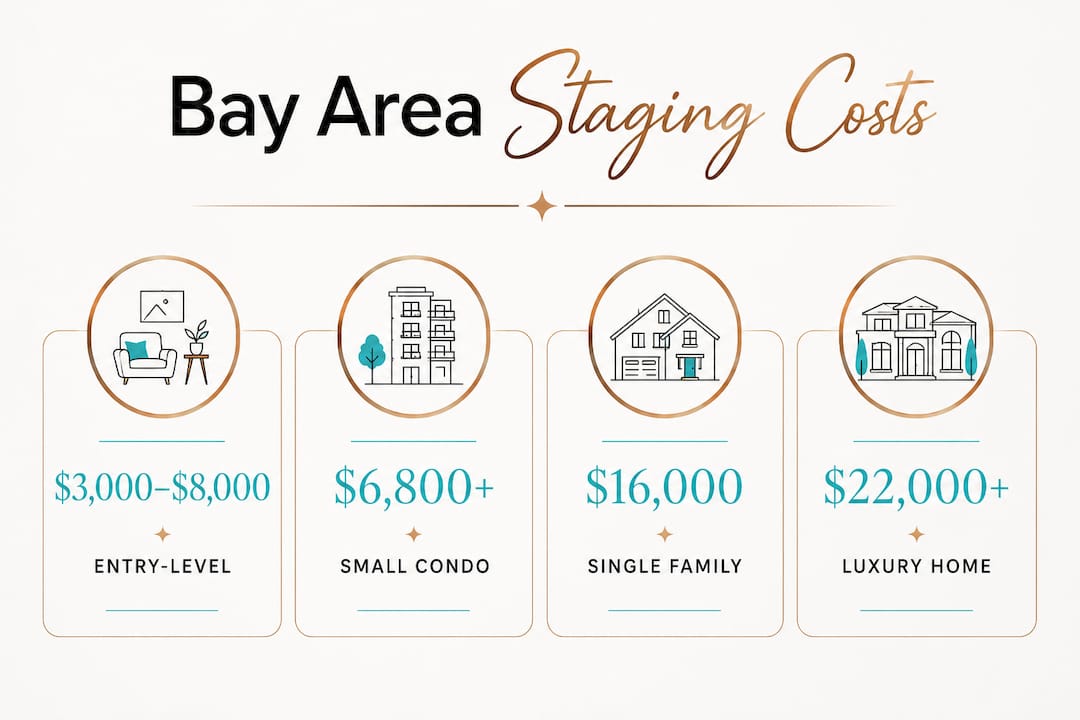
Home staging costs in the Bay Area vary significantly by property type, size, and the scope of work required. Small condos start around $6,800, standard single-family homes average $16,000, and luxury properties range from $22,000 to $45,000 or more. Entry-level staging in more modest Bay Area submarkets can fall between $3,000 and $8,000. These numbers reflect the premium labor, high-quality furniture rentals, and design expertise that Bay Area staging requires.
The table below shows typical 2026 staging cost ranges by property type:
| Property Type | Estimated Staging Cost |
|---|---|
| Small condo | $6,800+ |
| Standard single-family home | ~$16,000 |
| Luxury property | $22,000–$45,000+ |
| Entry-level or modest market home | $3,000–$8,000 |
Several factors drive where your property lands in these ranges. Square footage is the primary driver. Pricing by square footage produces a more consistent, home-wide presentation than pricing per room, which can result in uneven styling that buyers notice immediately. Location within the Bay Area also matters. A property in Palo Alto or Pacific Heights commands a higher staging investment than one in a more transitional neighborhood, because buyer expectations at that price point are correspondingly higher.
Pro Tip: Request a square-footage-based quote from your staging professional rather than a per-room rate. This approach produces a cohesive look throughout the home, which photographs better and reads more professionally to buyers browsing listings online.
The scope of staging work, whether it includes furniture rental, accessory sourcing, art placement, or only a consultation and rearrangement, also shapes the final cost. Sellers who understand these variables can budget accurately and avoid surprises.
How does neighborhood character affect staging strategy?
Tailoring staging to neighborhood buyer profiles is not optional in the Bay Area. It is the difference between a listing that resonates and one that feels generic. Each submarket attracts a distinct buyer, and the staging must speak directly to that person’s lifestyle expectations.
Consider these neighborhood-specific dynamics:
- Pacific Heights and Noe Valley: Buyers here expect high-end finishes, curated furniture, and an elevated aesthetic. Staging should feature clean-lined contemporary or transitional pieces, quality art, and a refined color palette. Anything that reads as budget or mismatched will undercut the listing’s perceived value.
- Richmond District and Sunset District: These neighborhoods attract value-conscious families and first-time buyers. Staging here benefits from warm, livable styling that communicates function. Think comfortable seating arrangements, defined dining spaces, and a welcoming feel rather than a showroom look.
- Fremont and Milpitas: Tech-sector buyers in these areas often prioritize space efficiency and move-in readiness. Staging should highlight home office potential, clean storage solutions, and updated kitchen and bath presentations.
- Saratoga and Los Gatos: Luxury buyers in these markets respond to staging that reflects the neighborhood’s established prestige. Upscale furniture, layered lighting, and outdoor living areas that are fully styled all contribute to a stronger offer.
- San Jose and Cupertino: These markets draw a mix of tech professionals and families. Staging that balances a modern aesthetic with practical family-oriented layouts tends to perform well.
Buyer psychology drives every staging decision. A buyer touring a Pacific Heights Victorian expects a different experience than one walking through a Milpitas townhome. Sellers who align their staging with neighborhood dynamics generate stronger emotional responses from buyers, which translates directly into more competitive offers.
Occupied vs. vacant home staging: what Bay Area homeowners need to know

Occupied and vacant home staging require fundamentally different approaches, and the choice affects both cost and timeline. Understanding the distinction helps you plan before your listing goes live.
Occupied home staging involves working with the furniture and belongings already in the home. The process typically includes:
- Decluttering and removing personal items, family photos, and excess furniture
- Rearranging existing pieces to improve flow and highlight architectural features
- Adding accent pieces, artwork, and accessories to refresh the space
- Neutralizing highly personalized decor so buyers can visualize themselves in the home
Vacant home staging starts from an empty space and requires:
- Sourcing and delivering a full furniture package for key rooms
- Accessorizing with rugs, art, lighting, and decorative objects
- Styling outdoor spaces and entryways to create a complete first impression
- Coordinating delivery, setup, and removal logistics around the listing timeline
Vacant staging typically costs more because it involves furniture rental fees on top of design labor. However, it also gives the stager complete creative control, which often produces the most photogenic results. Empty rooms photograph poorly and make it difficult for buyers to judge scale and livability.
Pro Tip: If you are staging an occupied home, remove at least one-third of your furniture before the stager arrives. Overcrowded rooms are the most common mistake sellers make, and clearing space costs nothing but time.
Consulting a staging professional early saves both money and time by focusing effort on the changes that produce the highest buyer impact. A professional can assess your specific situation and recommend whether full staging, partial staging, or a consultation-only approach makes the most sense for your property and budget.
Practical home staging tips for Bay Area sellers to maximize value
Staged homes in the Bay Area consistently receive more offers and sell closer to or above comparable market prices. The following steps give you a clear path to maximizing your listing’s appeal, whether you hire a full-service stager or manage portions of the preparation yourself.
- Declutter with intention. Remove personal collections, excess furniture, and anything that competes for visual attention. Buyers need to see the home, not your belongings. A clean, open space reads as larger and more valuable.
- Neutralize the color palette. Bold wall colors and highly personalized finishes narrow your buyer pool. Repainting in warm whites, soft greiges, or light warm neutrals is one of the highest-return pre-sale investments available to sellers.
- Prioritize curb appeal. Buyers form their first impression before they step inside. Fresh mulch, trimmed hedges, a clean front door, and updated exterior lighting cost relatively little but signal that the home has been well maintained.
- Focus staging intensity on high-impact rooms. The living room, primary bedroom, and kitchen drive buyer decisions more than any other spaces. If budget requires prioritization, concentrate your staging investment here first.
- Stage for online photography, not just in-person tours. Bay Area buyers compare homes online before scheduling visits. Staging that photographs well, with clear sightlines, balanced furniture placement, and strong natural light, generates more showing requests.
- Avoid over-staging. A home that looks like a furniture catalog can feel cold and uninviting. The goal is to create a lifestyle that buyers want to step into, not a display room they are afraid to touch.
- Address deferred maintenance before staging. Scuffed baseboards, dripping faucets, and cracked grout undercut even the best staging. Buyers notice these details and use them to negotiate price reductions. Fix the basics first, then stage.
- Consult a local expert before finalizing your plan. Experienced staging professionals understand current buyer preferences in your specific submarket. Their input on which improvements to prioritize can save you thousands in unnecessary spending. For sellers in Santa Clara County, pairing staging guidance with a strong listing strategy is the most direct path to a competitive sale. Resources like home upgrades that increase value in San Jose and Sunnyvale offer a useful framework for deciding where to invest before you list.
Key Takeaways
Professional home staging in the Bay Area is a targeted investment that, when matched to neighborhood buyer expectations and property type, consistently produces faster sales and stronger offers.
| Point | Details |
|---|---|
| Staging costs vary widely | Small condos start around $6,800; luxury homes can reach $45,000 or more in 2026. |
| Neighborhood drives strategy | Pacific Heights demands upscale styling; family-oriented areas benefit from warm, livable presentation. |
| Vacant staging costs more | Full furniture packages add expense but give stagers complete control for better photography. |
| Square footage pricing wins | Pricing by square foot produces a cohesive look that outperforms piecemeal room-by-room staging. |
| Early consultation saves money | Engaging a staging professional before listing focuses effort on high-impact changes and avoids costly mistakes. |
What I have learned from watching Bay Area sellers stage their homes
After working through more than 570 transactions across Santa Clara County, I have seen staging done brilliantly and I have seen it done badly. The sellers who get it wrong almost always make the same mistake: they stage for themselves instead of for their buyer. They keep the furniture arrangement they love, the wall color that feels cozy to them, and the personal touches that make the house feel like home. That is exactly the problem. A buyer needs to see their life in the space, not yours.
The second pattern I see consistently is sellers who treat staging as an expense rather than a marketing asset. In a market where a $16,000 staging investment represents a fraction of a $1.3 million sale price, the math is straightforward. A well-staged home that generates multiple offers and sells $50,000 or $100,000 above asking has returned that staging cost many times over. The sellers who resist staging to save money often end up with a longer time on market and a lower final price. Both outcomes cost far more than the staging would have.
What actually works is simple: match the staging to the buyer, not to your personal taste. Get a professional consultation before you spend a dollar on furniture or paint. And treat the photography as the primary deliverable. If the home does not look exceptional in photos, the in-person tour may never happen. The Bay Area real estate market moves fast, and first impressions are formed online before a buyer ever rings your doorbell.
— Laxmitoprealtor
Laxmitoprealtor’s concierge approach to selling your Bay Area home
Laxmi Penupothula brings more than 8 years of Bay Area real estate experience and $650 million in closed sales to every listing she represents. Professional home staging is a standard part of her concierge seller program, paired with pre-sale inspections, professional photography, 3D Matterport tours, and a custom marketing plan built around your specific property and neighborhood.

The results speak clearly. A San Jose home sold $100K over asking and a Fremont luxury home sold $250K over asking are two examples of what a fully integrated staging and marketing strategy produces in competitive Bay Area conditions. If you are preparing to sell in Santa Clara County or the greater South Bay, Laxmitoprealtor offers the expertise, the network, and the proven process to position your home for the strongest possible outcome.
FAQ
What is home staging and why does it matter in the Bay Area?
Home staging is the process of preparing and styling a property to appeal to buyers before it goes on the market. In the Bay Area, where median prices exceed $1 million, staging directly influences buyer perception and final sale price.
How much does home staging cost in the Bay Area in 2026?
Costs range from $3,000 to $8,000 for entry-level properties, around $16,000 for standard single-family homes, and $22,000 to $45,000 or more for luxury listings, depending on property size and staging scope.
Is staging an occupied home different from staging a vacant home?
Occupied staging works with existing furniture through decluttering and restyling, while vacant staging requires a full furniture and accessory package. Vacant staging typically costs more but offers greater creative control and better photography results.
How do I find the best home stagers near me in the Bay Area?
Look for staging professionals with a portfolio of Bay Area properties, verifiable client reviews, and experience in your specific neighborhood. Your listing agent should be able to recommend vetted staging partners aligned with your property type and price point.
Does staging really help a home sell faster?
Staged homes in San Francisco and the greater Bay Area consistently receive more offers and sell faster than unstaged properties. The visual appeal staging creates drives more online engagement, which leads directly to more in-person showings and stronger buyer competition.
Recommended
- San Jose Home Selling Tips 2026 | Increase Value Fast
- Selling Home Mission District Fremont: The 2026 Seller’s Playbook
- Prepare Your Milpitas Home for Sale: 6 Proven Steps (2026 Guide)
- How to Price Your Home in San Jose CA for Maximum Sale Price

Laxmi Penupothula
RealTrends Verified Top 1% REALTOR® Nationwide (2021–2025) • CA DRE #02047105
SCCAOR Top 1% Santa Clara County • Intero Chairman Circle 2023–2025 • \$650M+ Closed • 570+ Transactions
Silicon Valley & Bay Area Specialist — Cupertino, San Jose, Fremont, Milpitas, Sunnyvale & surrounding cities.
Get a Free Home Valuation →