


For buyers prioritizing schools and space, Almaden Valley and Evergreen consistently lead the shortlist. Willow Glen is the top pick for walkability and neighborhood character. Berryessa offers the strongest value-to-quality ratio for households watching their budget. Downtown San Jose suits buyers who want transit access and urban energy without a car.
- Almaden Valley — best for households: nearby schools, premium lot sizes, and a residential suburban feel near the foothills
- Willow Glen — best for walkability and neighborhood character: tree-lined streets, boutique dining, and a established community
- Berryessa
- Downtown San Jose — best for urban access: highest walkability, Diridon/Caltrain connectivity, and proximity to major tech employers
- Evergreen
TL;DR: San Jose rewards buyers who match neighborhood to priority. Households chasing nearby schools should look east and south. Professionals commuting to Apple, Google, or Cisco should anchor near transit corridors. Walkability seekers belong in Willow Glen or Downtown.
Pro Tip: Before you tour a single home, pull the school boundary map for your target neighborhood on the Santa Clara Unified or East Side Union HSD website. Boundaries shift, and a one-block difference can mean a different school entirely.

Ready to narrow your list? Scroll to the comparison matrix below, or contact Laxmi Penupothula for a tailored neighborhood shortlist based on your priorities.
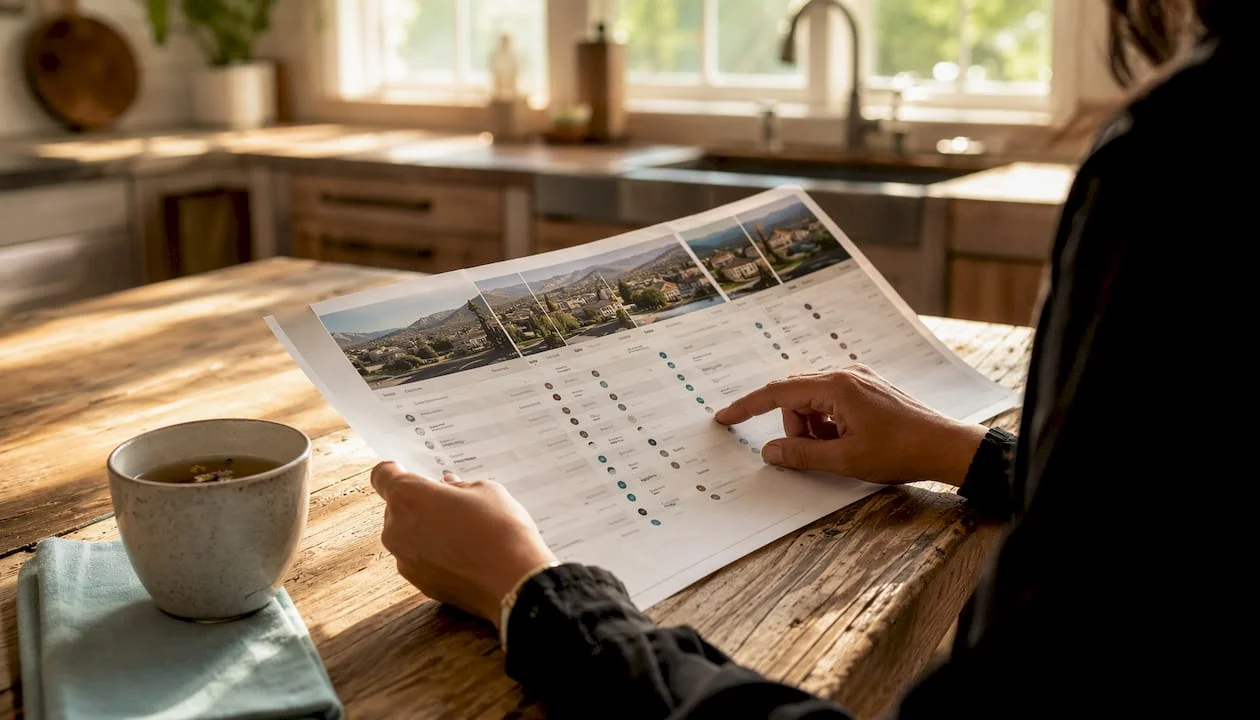
Table of Contents
- What does the San Jose market look like for buyers in 2026?
- How were these neighborhoods selected?
- Side-by-side comparison of San Jose’s top neighborhoods
- Detailed profiles of every top San Jose neighborhood
- How do you choose the right San Jose neighborhood for your situation?
- Renting vs. buying in San Jose’s top neighborhoods
- Key Takeaways
- What buyers consistently undervalue when choosing a San Jose neighborhood
- Ready to find your neighborhood? Here’s how Laxmitoprealtor can help
- Useful sources for San Jose neighborhood research
What does the San Jose market look like for buyers in 2026?
San Jose remains one of the most competitive residential markets in the United States. San Jose continues to attract a substantial number of new residents, according to HireAHelper’s 2026 Migration Report, and that inflow has kept demand pressure elevated heading into 2026, particularly in walkable and transit-adjacent neighborhoods where inventory turns fast.
Median home prices across San Jose vary sharply by neighborhood. Entry-level single-family homes in Berryessa and North San Jose generally fall within a moderate price range. Mid-tier family neighborhoods like Willow Glen and Cambrian Park are typically priced in a mid-level band. Premium enclaves like Almaden Valley and Silver Creek Valley command higher-end prices.
Rent pressure is real too. Two-bedroom apartments in highly walkable pockets command significant rent premiums, supporting buyer interest. That rent-to-own math increasingly favors buyers who can hold for five or more years, especially in neighborhoods with nearby school information where demand is structurally supported.
Laxmi Penupothula, a Top 1% REALTOR® in Santa Clara County with extensive transaction experience with hundreds of closed sales and significant volume, has tracked this market through multiple cycles. Her CRMLS-verified transaction data gives her a ground-level read on which neighborhoods are absorbing demand fastest and where negotiation room still exists.
| Neighborhood Tier | Typical Price Band | Market Pace |
|---|---|---|
| Entry-level (Berryessa, North SJ) | Moderate price range | Competitive |
| Mid-tier (Willow Glen, Cambrian Park) | Mid-level price range | Very competitive |
| Premium (Almaden Valley) | Higher price range | Selective, low inventory |
| Luxury (Silver Creek Valley) | Highest price tier | Affluent, limited supply |
How were these neighborhoods selected?
The data snapshot reflects conditions as of early 2026; fast-moving markets can shift within a quarter, so always verify current comps before making an offer. Selection criteria used:
- Safety:
- Schools:
- Commute and transit access: Drive time to major tech campuses (Apple Park, Google, Cisco, Adobe), proximity to Caltrain, VTA Light Rail, and BART
- Housing type and price band: Mix of single-family homes, condos, and townhomes; median sale price range
- Walkability and amenities: Walk Score, Bike Score, and Transit Score data; proximity to parks, dining, and retail
- Future development: Planned transit projects, rezoning activity, and City of San Jose development pipeline
Subjective calls, such as neighborhood vibe, architectural character, and community cohesion, were informed by Laxmi’s direct transaction experience across these areas. School information and their effect on home values are explored in depth in this analysis of school districts and home prices.
Side-by-side comparison of San Jose’s top neighborhoods
The table below covers all 13 neighborhoods across the seven dimensions that matter most to buyers. Use it to filter by your top two priorities, then read the full profile for your shortlist picks. Data reflects early 2026 conditions; block-level variation within each neighborhood is real, so treat price bands as directional.
| Neighborhood | Best For | Typical Price Band | Safety Level | Schools | Commute/Transit | Housing Types | Walkability |
|---|---|---|---|---|---|---|---|
| Almaden Valley | Households, space | Higher price range | Low crime | Top-rated (Almaden ESD) | Car-dependent; moderate commute times to tech hubs | Single-family, custom homes | Low Walk Score; high livability |
| Willow Glen | Walkability, character | $2M–$2.5M+ | Below avg crime | Good (Campbell Union HSD) | 20–30 min drive; limited transit | Craftsman/bungalow SFH, some condos | High Walk Score |
| Downtown San Jose | Buyers | — | Mixed; varies by block | Urban schools; proximity to SJSU | Excellent: Diridon, Caltrain, VTA | Condos, lofts, apartments | Highest Walk Score |
| Japantown | Culture, community | $900K–$1.3M | Moderate | Mixed ratings | Good VTA access; near Downtown | Older SFH, small multifamily | High walkability |
| West San Jose | Lifestyle, shopping | mid-level price range | significantly lower than city average | Good (Campbell Union HSD) | about 25–35 min to tech corridor | SFH, townhomes | High (Santana Row/Valley Fair) |
| Evergreen | Households, schools | mid-level price range | Low crime | Excellent (Evergreen ESD) | Car-dependent; 25–35 min | Newer SFH, some townhomes | Moderate |
| Berryessa | Value, households | mid-level price range | below city average | Solid (Berryessa USD) | Strong: BART, Mineta Airport nearby | SFH, condos, townhomes | Moderate |
| Silver Creek Valley | Luxury, households | $2.5M+ | Low crime | Top-rated | Car-dependent; moderate to longer travel times | Custom/luxury SFH | Low; residential |
| Cambrian Park | Households, value | mid-level price range | Low crime | Good (Campbell Union HSD) | 20–30 min drive | SFH, ranch-style | Moderate |
| Rose Garden | Historic charm, professionals | mid-level price range | Low crime | Good | 20–30 min; near VTA | Victorian/Craftsman SFH | High |
| North San Jose | Professionals, commuters | $900K–$1.3M | Moderate | Mixed | Excellent: VTA, near tech campuses | Condos, townhomes | Moderate–High |
| Santa Teresa | Households, affordability | mid-level price range | Low crime | Good (Santa Teresa HSD) | Car-dependent; moderate to longer travel times | SFH, townhomes | Low–Moderate |
| The Alameda / Garden Alameda | Walkability, culture | mid-level price range | Moderate | Mixed | Strong VTA; near Downtown | Older SFH, condos | Very High |
Detailed profiles of every top San Jose neighborhood
Almaden Valley
Vibe: Residential, affluent, and suburban with a strong sense of community. Think wide lots, mature trees, and weekend farmers’ markets. Best for: Households prioritizing nearby schools and space. Price band: $2M–$2.5M+. Housing types: Predominantly single-family homes, many with custom architecture and premium lot sizes. Schools here are among the city’s best, served by the Almaden Elementary School District and Leland High School (San Jose Unified). The trade-off is commute: Almaden Valley is car-dependent, and reaching Apple Park or Google typically takes 25–35 minutes without traffic.
- Pros:
- Cons: Car-dependent, premium price point, limited transit
Local tip: Almaden Valley’s micro-pockets near Almaden Lake Park command a premium even within the neighborhood. A case study from this area shows a home sold $100K over asking, illustrating how strategic pricing and presentation drive results here.
Willow Glen
Vibe: The most charming neighborhood in San Jose, full stop. Lincoln Avenue is lined with independent restaurants, boutique shops, and coffee houses. The housing stock is older, with well-preserved Craftsman bungalows and Spanish Colonials that attract buyers who care about architectural character.
Best for: Buyers who want walkability and neighborhood identity. Price band: Mid-level price range. Housing types: Single-family homes, with a small number of condos and townhomes near the commercial corridor. Schools fall under Campbell Union High School District and San Jose Unified, with solid but not top-tier ratings. Commute to the tech corridor is manageable by car (20–30 minutes), though transit options are limited compared to Downtown.
- Pros: Exceptional walkability, strong community identity, high resale demand, beautiful housing stock
- Cons: Limited transit, older homes may need updates, competitive bidding
Rent note: Rental inventory in Willow Glen is tight. Two-bedroom rentals in the area typically command higher than average rents, which reinforces the buy case for buyers who plan to stay five or more years.
Downtown San Jose
Vibe: Urban, energetic, and transit-rich. Home to SAP Center, the San Jose Museum of Art, and a growing restaurant scene. Downtown has the highest walkability of any San Jose neighborhood, with direct access to Diridon Station (Caltrain, Amtrak, future BART extension) and VTA Light Rail.
Best for: Buyers, students, and buyers who want to minimize car dependency. Price band: Lower to mid-range for condos and lofts. Housing types: Condos, lofts, and apartments dominate; single-family homes are rare. Schools in the immediate Downtown area are urban and mixed in quality. The planned BART extension to Diridon is a long-term value driver worth watching.
- Pros: Best transit access, walkability, nightlife, proximity to employers
- Cons:
Japantown
Vibe: One of only three remaining Japantowns in the United States, with a rich cultural identity, independent businesses, and a strong community anchor in Japantown San Jose. The neighborhood sits just north of Downtown and has seen steady reinvestment.
Best for: Buyers who value cultural community and urban proximity. Price band: $900K–$1.3M. Housing types: Older single-family homes and small multifamily buildings. Transit access is good via VTA, and the neighborhood is walkable by San Jose standards. Schools are mixed. Japantown’s cultural events and community organizations give it a cohesion that purely residential neighborhoods often lack.
- Pros: Cultural identity, improving investment, walkable, close to Downtown
- Cons:
West San Jose
Vibe: Upscale suburban with exceptional retail access. Westfield Valley Fair and Santana Row sit within the neighborhood, making it one of the most lifestyle-rich areas in the city. Best for: Buyers who want safety, shopping, and a short commute to the tech corridor. Price band: Mid-level price range. Housing types: Single-family homes and townhomes.
Schools fall under Campbell Union High School District, with solid ratings. The commute to Apple, Google, and Cisco is among the shortest of any San Jose neighborhood. Walkability is high near Santana Row.
- Pros:
- Cons: Premium pricing for the area, limited transit beyond VTA buses
Pro Tip: West San Jose’s proximity to Santana Row creates a rent premium for apartments in the immediate vicinity. If you’re comparing buy vs. rent here, the ownership math tends to favor buyers who can afford a substantial down payment and plan to hold long term.
Evergreen
Vibe: Spacious, residential, and newer than most San Jose neighborhoods. Evergreen sits in the eastern foothills with hillside views, newer construction, and a strong sense of planned community design.
Best for: Households seeking nearby schools and newer homes. Price band: Mid-level price range. Housing types: Newer single-family homes and some townhomes. The commute is car-dependent, with moderate to longer travel times to major tech campuses. A negotiation case study from Evergreen illustrates how buyers can navigate competitive offers in this neighborhood.
- Pros:
- Cons: Car-dependent, longer commute, less walkable
Berryessa
Vibe: Practical, residential, and underrated. Berryessa sits in northeast San Jose with a varied community, solid schools, and one of the best transit profiles of any family neighborhood in the city.
Best for: Value-conscious households who need transit access. Price band: Moderate price range. Housing types: Single-family homes, condos, and townhomes. Berryessa USD schools earn solid ratings. BART access and proximity to Mineta San Jose International Airport make this neighborhood unusually well-connected for its price point. Among top residential neighborhoods, Berryessa consistently appears for its combination of safety, schools, and affordability.
- Pros:
- Cons: Less well-known than Almaden or Evergreen, older housing stock in some pockets
Silver Creek Valley
Vibe: Affluent, gated, and private. Silver Creek Valley is one of San Jose’s most exclusive residential enclaves, with custom homes, golf course views, and a country club atmosphere.
Best for: Luxury buyers seeking privacy, prestige, and nearby schools. Price band: Highest price range. Housing types: Custom and luxury single-family homes. Median sale prices in Silver Creek Valley rank among the highest in the city, exceeding $2.5 million and placing it firmly in the luxury tier. The commute is car-dependent, with moderate to longer travel times to major tech campuses. This is a neighborhood where resale value is driven by scarcity and prestige as much as by fundamentals.
- Pros:
- Cons: Very high price point, car-dependent, limited inventory
Cambrian Park
Vibe: Residential, established, and residential without the premium price tag of Almaden or Willow Glen. Cambrian Park has a loyal base of long-term residents and solid ranch-style housing stock.
Best for: Households seeking value in a safe, established neighborhood. Price band: Mid-level price range. Housing types: Ranch-style single-family homes. Schools fall under Campbell Union High School District. The commute to the tech corridor runs approximately 20–30 minutes by car. Cambrian Park lacks the walkability of Willow Glen but offers more space per dollar.
- Pros:
- Cons: Limited walkability, older housing stock, less neighborhood identity
Rose Garden
Vibe: Historic, architecturally distinctive, and close to Downtown without the urban density. The Municipal Rose Garden itself is a genuine neighborhood anchor, and the Victorian and Craftsman homes here attract buyers who appreciate character over square footage.
Best for: Professionals and buyers who want historic charm with urban proximity. Price band: Mid-level price range. Housing types: Victorian and Craftsman single-family homes. Schools are solid. VTA access is reasonable, and the commute to Downtown employers is short. Rose Garden homes tend to sell quickly because supply is structurally limited.
- Pros:
- Cons: Older homes require maintenance investment, limited new construction
North San Jose
Vibe: Tech-centric and transit-connected. North San Jose is the closest residential area to the major tech campuses along North First Street and the Alviso corridor, making it the default choice for professionals who want a short commute above all else.
Best for: Tech professionals and commuters. Price band: Moderate price range for condos and townhomes. Housing types: Condos and townhomes dominate; single-family homes are limited. VTA Light Rail runs through the area, and several tech campuses are within cycling distance. Schools are mixed. For buyers comparing North San Jose to nearby Milpitas market trends, the commute profiles are similar but North San Jose typically carries a slight price premium for its San Jose address.
- Pros: Short tech commute, transit access, lower price point, newer condo stock
- Cons: Less residential, mixed schools, limited green space
Santa Teresa
Vibe: Suburban, spacious, and peaceful. Santa Teresa sits in the southern foothills near the Santa Teresa County Park, attracting households who want outdoor access and a slower pace.
Best for: Households seeking affordability and outdoor lifestyle. Price band: Moderate price range. Housing types: Single-family homes and townhomes. Santa Teresa High School earns solid ratings. The commute is car-dependent, with moderate to longer travel times to most tech campuses. The neighborhood’s proximity to hiking trails and open space is a genuine quality-of-life differentiator.
- Pros:
- Cons: Car-dependent, long commute, limited walkability and retail
The Alameda / Garden Alameda
Vibe: Culturally active, walkable, and architecturally varied. The Alameda corridor connects Downtown San Jose to Santa Clara, lined with restaurants, theaters, and independent businesses. Garden Alameda is one of the city’s highest-scoring neighborhoods for walkability and bike access, with High Walk Scores.
Best for: Buyers who want walkability, culture, and urban energy without full Downtown density. Price band: Mid-level price range. Housing types: Older single-family homes and condos. Schools are mixed. VTA access is strong. The seller dynamics along The Alameda have been notably active, with strong interest from buyers relocating from higher-cost Bay Area markets. Yard maintenance in this area often benefits from low-maintenance landscaping solutions, including artificial grass installations that reduce upkeep costs on smaller urban lots.
- Pros: High walkability, cultural amenities, strong transit, urban character
- Cons:
How do you choose the right San Jose neighborhood for your situation?
Step-by-step selection process
- Define your non-negotiables. Write down your top three priorities before you look at a single listing. School district, commute time, and price ceiling are the three that most often determine the final decision.
- Map your commute in real time. Drive or transit your target route during actual peak hours, not on a Sunday afternoon. A 20-minute commute on paper can run 45 minutes at 8 AM on a Tuesday.
- Verify school boundaries before you fall in love with a house. School boundaries in San Jose are not always contiguous with neighborhood names. A home on the edge of Willow Glen may feed into a different school than the one you researched. Confirm directly with the district.
- Neighborhood-level averages mask variation.
- Visit at different times. A neighborhood at 10 AM on a Saturday tells you almost nothing about what it is like at 7 PM on a weekday. Visit at least twice, at different times of day.
- Estimate your full cost of ownership. Beyond the purchase price, factor in property taxes (typically 1.1–1.25% of assessed value in Santa Clara County), HOA fees where applicable, and closing costs (typically 1–3% for buyers in California).
- Talk to neighbors, not just your agent. Knock on a door or two. Residents will tell you things that no disclosure document will.
Questions to ask at showings
- What are the exact school boundaries for this address?
- Are there any active HOA disputes or pending special assessments?
- What is the flood zone designation, and has the sewer lateral been inspected?
- Are there any planned developments or rezoning applications within a quarter mile?
- How long has the property been on market, and have there been any price reductions?
Red flags to watch for
- Unusually long days-on-market in a neighborhood where comparable homes are selling quickly
- Inconsistent or incomplete disclosure history
- Multiple price reductions without a clear explanation
- Deferred maintenance that suggests the seller is motivated to exit quickly
For buyers who want a structured approach to avoiding costly mistakes, this guide on first-time homebuyer errors covers the most common missteps in the San Jose market.
Renting vs. buying in San Jose’s top neighborhoods
The rent-versus-buy decision plays out differently across San Jose’s neighborhoods, and the gap between renting and owning has widened in the most walkable areas.
In Downtown San Jose and The Alameda / Garden Alameda, high Walk Scores correlate directly with rent premiums. Walkability metrics are a reliable predictor of rent pressure: neighborhoods with High Walk Scores consistently command higher rents, which compresses the yield for landlords but strengthens the long-term case for owners who can absorb the higher purchase price. A two-bedroom in St. Leo’s, one of the most walkable sub-neighborhoods in the city, commands a high rent. At that rent level, the monthly cost of ownership on a $1.3M home with 20% down is often comparable, and the owner builds equity while the renter does not.
In Almaden Valley, Silver Creek Valley, and Evergreen, the rental market is thin. These neighborhoods are overwhelmingly owner-occupied, and rental inventory is scarce. Buyers in these areas are almost always making a long-term commitment, not a short-term hedge. The ownership case is strong for buyers with a five-plus-year horizon and the financial profile to absorb a $2M–$2.5M+ purchase.
Berryessa and North San Jose offer the most balanced rent-vs.-buy picture. Condo and townhome inventory in both neighborhoods gives buyers a lower entry point, and rental demand from tech workers keeps vacancy low. For buyers considering an accessory dwelling unit to offset carrying costs, the ADU manager marketplace is a practical resource for evaluating rental income potential on properties with ADU capacity.
West San Jose and Cambrian Park sit in the middle. Rents are elevated near Santana Row, but the ownership premium over renting is meaningful. Buyers who plan to stay seven or more years generally come out ahead, particularly if they purchase before a competitive spring market cycle.
The general principle: the higher the Walk Score, the more rent pressure you will face as a renter, and the stronger the long-term ownership case becomes for buyers who can qualify. Use the home value estimator to run neighborhood-specific comps before committing to either path.
Key Takeaways
San Jose’s best neighborhoods for households and buyers in 2026 are defined by the intersection of school information, commute access, and price band, and no single neighborhood wins on all three.
| Point | Details |
|---|---|
| Top family picks | Almaden Valley, Evergreen, and Berryessa lead for school information, safety, and residential housing. |
| Best walkability | Downtown San Jose and The Alameda / Garden Alameda (High Walk Scores) suit car-optional buyers and renters. |
| Best value | |
| Luxury tier | Silver Creek Valley median prices exceed $2.5M, making it the city’s most exclusive family enclave. |
| Work with Laxmitoprealtor | Laxmi Penupothula (Top 1% SCCAOR, $650M+ closed sales) provides tailored neighborhood shortlists and school-boundary checks for buyers across all San Jose price tiers. |
What buyers consistently undervalue when choosing a San Jose neighborhood
The most common mistake buyers make in San Jose is optimizing for the neighborhood name rather than the specific address. Willow Glen is a great example. The name carries real cachet, and buyers often pay a premium for it without checking whether their target street feeds into the school they actually want. Two homes three blocks apart in Willow Glen can have different school assignments, different flood zone designations, and meaningfully different resale trajectories.
The same logic applies to commute. Buyers routinely underestimate how much a 10-minute commute difference compounds over five years. A buyer in Berryessa with BART access may spend less time commuting annually than a buyer in Almaden Valley with a shorter map distance but no transit alternative. That time has real value, and it rarely shows up in the listing price.
Micro-commute, school boundary precision, and resale-ready condition are the three variables most buyers discount and most agents gloss over. The buyers who make the best long-term decisions in this market are the ones who treat neighborhood selection as a data exercise first and an emotional one second. That does not mean ignoring how a street feels when you walk it. It means verifying the numbers before you fall in love with the feeling.
Laxmi Penupothula’s background in IT project management shapes exactly this approach: every transaction is treated as a structured problem with verifiable inputs, not a gut-feel decision. With five consecutive years as a Top 1% REALTOR® in Santa Clara County and $650M+ in closed sales, that discipline has produced results that consistently outperform the market.
Ready to find your neighborhood? Here’s how Laxmitoprealtor can help
Choosing among San Jose’s best neighborhoods is not a decision that benefits from generic online research alone. 
Laxmitoprealtor offers buyers a concrete set of services designed for exactly this decision:
- Tailored neighborhood shortlists based on your priorities (schools, commute, price, lifestyle)
- School-boundary verification before you make an offer
- Market reports with current CRMLS-verified comps for your target neighborhoods
- Negotiation and offer strategy grounded in 570+ closed transactions across Santa Clara County
- Relocation guidance for buyers moving from outside the Bay Area
Laxmi’s track record speaks directly to what buyers in competitive neighborhoods need. A recent Almaden case study shows a home sold $100K over asking, and a San Jose sale at 2305 Oak Flat Road closed $200K over asking, both results of strategic pricing and high-impact marketing. To get a tailored neighborhood report for your specific priorities, connect with Laxmi Penupothula today.
Useful sources for San Jose neighborhood research
These primary sources back the data in this article. Each serves a different research purpose.
- HireAHelper 2026 Migration Report — Migration inflow data for San Jose; use to understand demand pressure and which neighborhoods are attracting the most new residents.
- Apartment List: Best San Jose Neighborhoods (2025) — Walk Score, Bike Score, Transit Score, and average two-bedroom rents by neighborhood; use to compare walkability and rent-vs.-buy math.
- Apartment List: Best San Jose Neighborhoods for Households (2025) — School grades and safety profiles for family-focused neighborhoods; use when evaluating Almaden, Evergreen, Berryessa, and Willow Glen.
- City of San Jose Neighborhoods — Official neighborhood boundaries, community resources, and development plans; use to verify neighborhood definitions and check planned projects.
- U.S. Census Bureau: San Jose QuickFacts
- Japantown San Jose — Community organization and event calendar for Japantown; use to assess community vitality and cultural programming before buying in that neighborhood.
A note on data dates: Neighborhood market data moves faster than most published guides. Always check the snapshot date on any source you use, and cross-reference with current Zillow or Redfin comps before making an offer. A guide published in early 2026 may not reflect a market shift that occurred in the most recent quarter.
Recommended
- Where to Buy a Home in Fremont for Households: Neighborhood Guide – Laxmi Penupothula
- Best Neighborhoods in Milpitas for Households – Laxmi Penupothula
- Top 1% San Jose CA Real Estate Agent | Buy & Sell Homes 2026 | Laxmi Penupothula
- Alamedan, San Jose: Why Sellers Are Seeing Strong Interest Right Now

Laxmi Penupothula
Top 1% Realtor SCCAOR, RealTrends Verified (2021–2025) • CA DRE #02047105
SCCAOR Top 1% Santa Clara County • Intero Chairman Circle 2023–2025 • \$650M+ Closed • 570+ Transactions
Silicon Valley & Bay Area Specialist — Cupertino, San Jose, Fremont, Milpitas, Sunnyvale & surrounding cities.
Get a Free Home Valuation →