


Yes. California law requires a carbon monoxide device in any dwelling with a fossil-fuel appliance, fireplace, or attached garage, and every unit must carry California State Fire Marshal (CSFM) approval. If you own or manage such a property, confirm your alarms are CSFM-listed, placed outside sleeping areas and on every level, and tested monthly. Renters should request written confirmation that a landlord has met this obligation.
TL;DR:
- Only CSFM-listed carbon monoxide detectors are legally sellable and installable in California, and they must be tested and certified to UL 2034 or UL 2075 standards.
- Detectors should be installed outside each sleeping area and on every level, including basements, with placement away from heat sources like fireplaces or gas stoves to prevent false alarms.
- Landlords are legally required to maintain functioning CO alarms in rental units, and failure to do so can result in habitability violations and legal liabilities.
- Most CO alarms have a operational lifespan of five to seven years, and they must be tested monthly, with batteries replaced at least annually for standard units.
- Combining smoke and CO alarms is possible but only effective if alarm patterns are distinct; system-connected detectors offer better coverage for large or multi-unit homes.
Table of Contents
- What Does California Law Require for Carbon Monoxide Detectors?
- Where Should You Install a Carbon Monoxide Detector?
- Which Carbon Monoxide Detectors Meet California Standards?
- Who Is Responsible: Landlords, Renters, or Homeowners?
- How Do You Choose a Reliable, Compliant CO Detector?
- How Often Should You Test and Replace CO Alarms?
- Do Home Renovations Trigger New Alarm Requirements?
- What Happens if You Don’t Comply With California’s CO Alarm Law?
- What Are the Symptoms of Carbon Monoxide Poisoning?
- How Many CO Detectors Does Your Home Actually Need?
- Should CO Detectors Connect to Smoke Alarms or Home Automation?
- A Local Agent’s Take on Safety Compliance and Sale Readiness
- How Laxmitoprealtor Helps Sellers and Landlords Get Compliance-Ready
- Sources
What Does California Law Require for Carbon Monoxide Detectors?
The Carbon Monoxide Poisoning Prevention Act, codified at HSC 17926, requires owners of dwelling units with a fossil-fuel burning heater, appliance, fireplace, or an attached garage to install an approved carbon monoxide device. Single-family homes had early compliance deadlines. Other dwelling units, including apartments and condos, had later deadlines. Hotels and motels had the latest deadlines under the law. Those deadlines have long passed, so any covered property today is already out of compliance if it lacks a device.
The statute also bars retailers from selling a carbon monoxide device in California unless it carries CSFM listing, and it defines what actually counts as a “carbon monoxide device” under Health & Safety Code sections 13260 through 13263. Cities and counties can add stricter local rules, but none can undercut the state floor. Fairfield, San Diego, and dozens of other municipalities publish guidance that mirrors the statute almost word for word, which tells you how little room there is for local interpretation.
Where Should You Install a Carbon Monoxide Detector?
California building standards call for a carbon monoxide alarm outside each separate sleeping area and on every occupiable level of the home, including basements. A two-story house with bedrooms upstairs needs coverage on both floors, not just near the bedroom doors. Municipal guidance from cities like Fairfield repeats this placement standard nearly verbatim, and it lines up with manufacturer instructions and California Building Standards Code Section R315.
Multi-family buildings and hotels follow the same logic per unit, though shared mechanical rooms and common corridors sometimes need additional coverage under local fire code. The most common placement mistake is mounting a unit directly above a fireplace or right next to a gas stove, where heat and combustion byproducts trigger false alarms. Another frequent miss: installing detectors only near the furnace instead of near where people actually sleep, which defeats the purpose of the law entirely.
Which Carbon Monoxide Detectors Meet California Standards?
Not every CO alarm sold nationally is legal to install in California. The state requires devices tested and certified to ANSI/UL 2034 or UL 2075 by a nationally recognized testing laboratory, and the unit must carry CSFM listing before it can legally be sold or installed here.
San Diego’s fire department guidance breaks CSFM-approved products into three categories: standalone CO alarms, system-connected CO detectors (wired into a broader fire alarm system), and combination smoke/CO units. If you’re buying a combination unit, check that it produces distinct alarm patterns for smoke versus carbon monoxide. Confusing the two during an actual event wastes precious minutes.
Before you buy anything, look for the CSFM listing number on the packaging or check the model against CSFM’s public device list. UL 2034 covers standard residential alarms; UL 2075 covers gas and vapor detectors sometimes bundled into combination systems.
Who Is Responsible: Landlords, Renters, or Homeowners?
Under California Civil Code, landlords must install, maintain, and repair carbon monoxide devices in rental units, and renters have a right to a functioning alarm as a condition of habitability. If a landlord ignores a documented request to fix or replace a dead unit, that’s a maintenance failure with real legal exposure, not a minor inconvenience.
Property managers should keep dated maintenance logs and testing records for every unit. That paper trail matters during a sale, a lease renewal dispute, or a habitability complaint. Compliance also intersects directly with disclosure obligations during a property sale. Sellers should review how CO alarm status fits into the broader Transfer Disclosure Statement process, since undisclosed safety deficiencies can delay or derail a closing.
How Do You Choose a Reliable, Compliant CO Detector?
Sensor type matters more than any marketing feature. Electrochemical sensors deliver the most accurate readings over the device’s lifespan and are what most safety reviewers, including CNET’s testing team, recommend prioritizing over cheaper alternatives. Confirm UL 2034 certification before anything else.
Power source is a real practical decision, not just a preference:
- Sealed 10-year battery units work well in rooms without nearby outlets and eliminate battery-swap maintenance for a decade.
- Hardwired units with battery backup suit central hallways where an electrician can tie into house wiring.
- Plug-in units with battery backup offer a middle ground for renters who can’t modify wiring.
- Standard battery alarms cost less upfront but demand more frequent owner attention.
Digital displays and peak-level memory let you see whether CO has been creeping up between alarms, which safety reviewers note helps catch a slow leak before it becomes an emergency. Mobile alerts and professional monitoring add convenience, but they’re secondary to sensor quality and certification.
Pro Tip: If you’re comparing two CSFM-listed units, choose the one with peak-level memory. It’s the feature most likely to reveal an intermittent problem, like a cracked furnace heat exchanger, that a simple pass/fail alarm would miss entirely.
How Often Should You Test and Replace CO Alarms?
Test every unit monthly using the built-in test button, and replace standard batteries at least once a year. Most CO alarms, even hardwired ones, have a functional lifespan of five to seven years, after which the sensor degrades regardless of battery condition. Check the manufacture date stamped on the back of the unit.
If an alarm sounds, treat it as real until proven otherwise: get everyone outside immediately, call 911 or your local fire department from outside the home, and don’t re-enter until emergency responders clear it. Afterward, have your gas utility or a qualified technician inspect appliances before resetting the alarm. Property managers should log every test, battery swap, and false alarm, since that record becomes valuable evidence of diligence if a habitability dispute ever arises.
Do Home Renovations Trigger New Alarm Requirements?
Many permitted projects, HVAC replacements, major remodels, reroofing, quietly trigger a requirement to bring smoke and CO alarms up to current code, even when the alarms themselves weren’t part of the scope of work. This catches homeowners and even some contractors off guard.
Before you pull a permit, call your local building department and ask directly whether the project will trigger an alarm upgrade. Document what you’re told and keep receipts for any new units installed, since inspectors will check alarm compliance as part of final sign-off.
What Happens if You Don’t Comply With California’s CO Alarm Law?
California treats a missing or non-functional carbon monoxide alarm primarily as a code violation rather than a criminal matter for most homeowners, but the consequences still bite. Local building and fire departments can issue correction notices during inspections tied to permits, refinancing, or point-of-sale requirements, and failing to resolve a violation within the notice period can escalate to citations and fines that vary by jurisdiction. For landlords, the stakes run higher. A missing or broken CO alarm is a habitability defect under California Civil Code, which means a tenant can withhold rent, request repairs through code enforcement, or pursue a civil claim if a carbon monoxide incident causes injury or property damage in a non-compliant unit. Insurance carriers sometimes deny or reduce claims tied to a fire or CO incident when a required device was absent, arguing the loss stemmed from a known, correctable hazard. Sellers face a different kind of exposure. Non-disclosure of a known missing alarm can surface later as a misrepresentation claim if a buyer discovers the gap after closing. That’s a slower-moving risk than a fine, but it can be far more expensive to resolve. 
What Are the Symptoms of Carbon Monoxide Poisoning?
Carbon monoxide is colorless and odorless, which is exactly why the law exists in the first place. Early symptoms mimic the flu closely enough that people frequently misdiagnose themselves: headache, dizziness, weakness, nausea, and confusion. Because the gas displaces oxygen in the bloodstream rather than irritating the lungs, victims often feel drowsy rather than alarmed, which is part of what makes it so dangerous during sleep.
Higher concentrations or longer exposure escalate quickly to vomiting, chest pain, loss of muscle control, and eventually loss of consciousness. Infants, older adults, people with heart or respiratory conditions, and pregnant women face elevated risk from lower concentrations than a healthy adult would need to feel affected. Multiple household members or pets falling ill at the same time, especially if symptoms ease when everyone leaves the house, is one of the clearest warning signs of a CO source somewhere in the building.
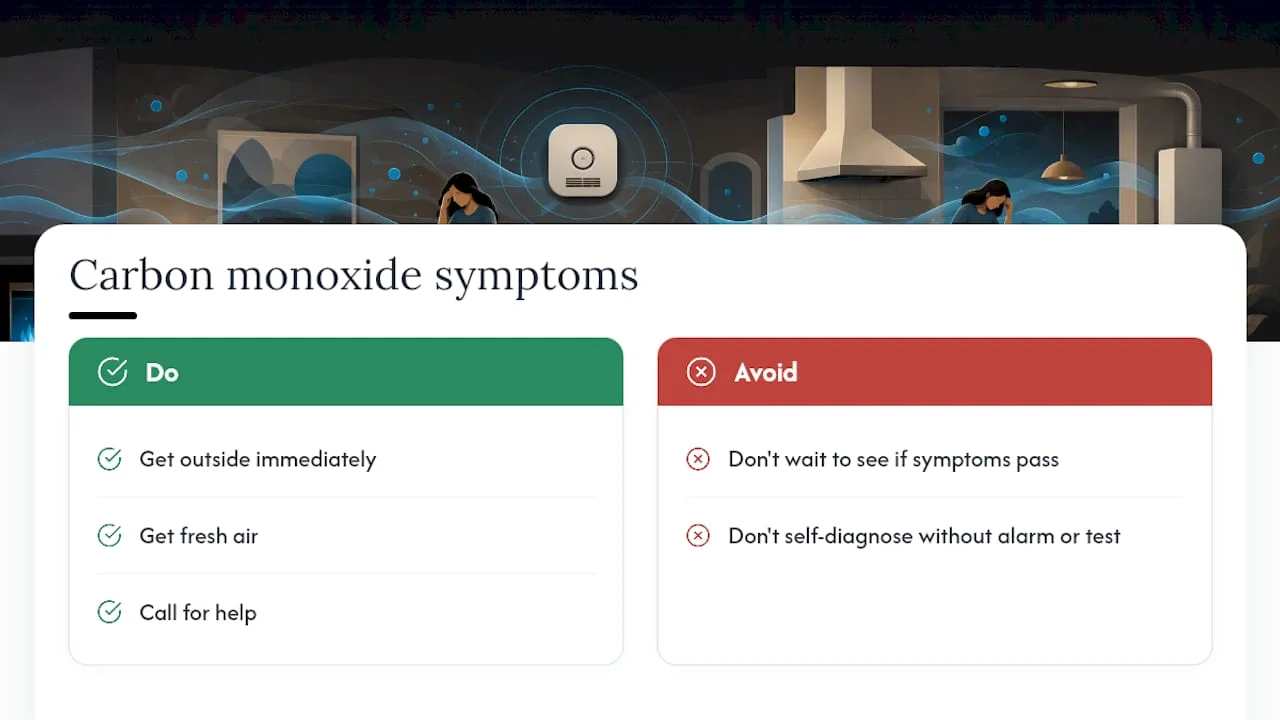
There’s no reliable way to self-diagnose carbon monoxide exposure without a working alarm or a blood test, since symptoms overlap so heavily with common illnesses. If a functioning CO alarm sounds, or if multiple people in the same home develop similar symptoms without an obvious cause, treat it as a carbon monoxide event: get outside, get fresh air, and call for help. Don’t wait to see if symptoms pass on their own.
How Many CO Detectors Does Your Home Actually Need?
Home layout determines coverage more than square footage alone. A single-story, three-bedroom home with bedrooms clustered together might need only two alarms to satisfy the “outside each sleeping area, on every level” rule. A sprawling two-story home with a detached bedroom wing or a finished basement will need three or more units to cover every level and every sleeping zone properly.
Count your sleeping areas first, then count your levels, including basements and finished attics used as living space. Each sleeping area needs a nearby alarm, and each level needs at least one regardless of whether anyone sleeps there. Homes with a garage-attached bonus room or an in-law unit above the garage often get missed because owners think of the main house layout only, not the auxiliary living space.
Larger or multi-wing homes benefit from system-connected detectors that report to a central panel, since a standalone alarm in a distant wing might not be audible from the primary bedroom. If you’re evaluating a home before purchase or preparing one for sale, mapping alarm coverage against the actual floor plan, not just a generic room count, catches gaps that a quick walkthrough misses. A detailed floor plan makes that mapping exercise far more precise than eyeballing it room by room.
Should CO Detectors Connect to Smoke Alarms or Home Automation?
Combination smoke and CO units simplify installation and reduce the number of devices mounted on a ceiling, but they only work well when the alarm patterns are unmistakably different. A unit that uses the same tone for both hazards forces occupants to guess which emergency they’re facing, which wastes time that matters.
System-connected detectors that report to a central fire alarm panel offer a real advantage in larger homes and multi-family buildings: one triggered unit alerts the whole system, not just the room it’s mounted in. That’s part of why San Diego’s fire code guidance separates standalone alarms from system detectors as distinct CSFM categories.
Smart home integration, Wi-Fi alerts, app notifications, works well as a convenience layer on top of a certified device, never as a replacement for one. A phone notification does nothing for someone already asleep and disoriented. That’s where professional monitoring services earn their value, since a monitored system dispatches emergency responders automatically rather than waiting on an occupant to see a push alert. For vacant rentals, second homes, or households with elderly residents, that automatic dispatch can matter more than any other feature on the list.
A Local Agent’s Take on Safety Compliance and Sale Readiness
Missing or outdated CO alarms surface constantly during home inspections, and they stall closings that should move smoothly. Verifying alarm compliance before listing, alongside smoke detector requirements, avoids last-minute repair credits and buyer distrust. A concierge seller experience includes coordinating inspections and vendor referrals so compliance never becomes a negotiating chip.
— Mr
How Laxmitoprealtor Helps Sellers and Landlords Get Compliance-Ready
Laxmitoprealtor gives Santa Clara County sellers and landlords a faster path to a clean closing than handling inspections and disclosures alone. Coordinating pre-sale inspections, vendor referrals for alarm and safety upgrades, and disclosure preparation in one place means compliance issues surface early, not during buyer negotiations when they cost you leverage.

Laxmi Penupothula’s concierge approach covers the details that stall closings, professional staging, pre-sale inspection coordination, and accurate disclosure documentation, so a missing CO alarm never becomes a renegotiation point after inspection. If you’re preparing a Cupertino, Sunnyvale, San Jose, or greater South Bay property for sale, start with a seller’s guide walkthrough to see exactly what compliance and staging steps apply to your home before it hits the market.
Sources
- California Code, HSC 17926.
- Carbon Monoxide Alarms | Fairfield, CA
- Carbon Monoxide Alarms | City of San Diego Official Website
- CNET: Best carbon monoxide detector (2026 review).
Recommended
- California Smoke Detector Requirements: What Every Owner Must Know
- California Escrow Timeline: What to Expect in 30–60 Days
- California TDS Form: What Sellers and Buyers Must Know
- Seller Closing Costs in California: What They Are and What They Run

Laxmi Penupothula
Top 1% Realtor SCCAOR, RealTrends Verified (2021–2025) • CA DRE #02047105
SCCAOR Top 1% Santa Clara County • Intero Chairman Circle 2023–2025 • \$650M+ Closed • 570+ Transactions
Silicon Valley & Bay Area Specialist — Cupertino, San Jose, Fremont, Milpitas, Sunnyvale & surrounding cities.
Get a Free Home Valuation →