


San Jose is defined as Silicon Valley’s largest city and the economic engine of Santa Clara County, where median household income exceeds $165,000 and housing costs rank among the highest in the nation. Moving to San Jose rewards careful planners and punishes those who arrive unprepared. The city offers world-class career opportunities, genuine cultural variety, and a mild climate year-round. This guide covers every major decision you face: moving logistics, neighborhood selection, true costs, and lifestyle realities that most relocation articles skip entirely.
What are the essential steps for moving to San Jose?
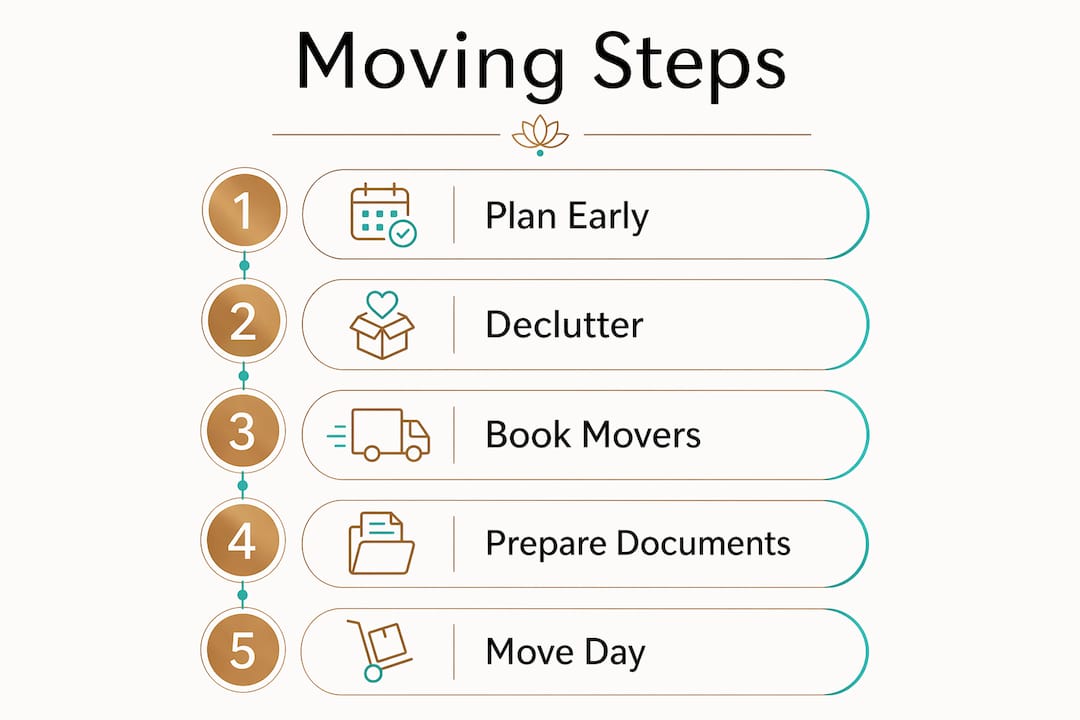
Start planning your San Jose move at least eight weeks before your target date. The local moving market is competitive, and the best licensed crews book out fast, especially between may and september.
- Get at least three in-home estimates from movers who hold both a USDOT number and a California CAL-T license. Verbal quotes over the phone are unreliable for a market this complex.
- Reserve parking permits early. Parking is a major logistical hurdle in neighborhoods like Willow Glen and downtown San Jose. Missing a permit can cancel your move day entirely.
- Book freight elevator time if you are moving into a high-rise or mixed-use building. Many downtown buildings require advance reservations and a refundable deposit.
- Transfer utilities two weeks out. Schedule PG&E, water, and internet transfers at least 1–2 weeks before your move date to avoid gaps in service.
- File a USPS change of address at least one week before moving. Mail forwarding takes several days to activate.
- Pack an essentials box last. Include medications, chargers, a change of clothes, and important documents. This box rides in your personal vehicle, not the truck.
Pro Tip: Declutter before you get quotes. Moving companies charge by weight or volume, and hauling items you no longer need adds real cost in a market where hourly rates already run high.
The move day itself requires one more layer of preparation. Confirm gate codes and HOA access procedures with your new building or community manager at least 48 hours in advance. A single missing code can stall an entire crew for hours.

How do San Jose housing costs and neighborhoods compare?
San Jose housing costs sit well above national averages. The city’s Regional Price Parity index is 110.4, meaning goods and services cost roughly 10% more than the US average. The rent index, however, reaches 211.9, which signals that renters pay more than double the national benchmark for comparable space. That gap matters whether you are buying or renting.
Popular neighborhoods and what they cost
San Jose neighborhoods differ significantly in price, lifestyle, and commute profile. Here is a practical breakdown:
| Neighborhood | Character | Price tier | Best for |
|---|---|---|---|
| Willow Glen | Tree-lined streets, walkable village core | Premium | Households, professionals |
| Almaden Valley | Suburban, nearby schools, residential | Premium | Households prioritizing schools |
| Downtown San Jose | Urban density, nightlife, transit access | Mid to high | Buyers |
| East San Jose | Affordable, culturally varied, improving | Budget-friendly | First-time buyers, renters |
| Silver Creek | Gated luxury, golf course views | Luxury | Move-up buyers |
Pro Tip: Consider a short-term furnished rental for your first 60–90 days. Spending time in a neighborhood before signing a lease or purchase contract reveals commute realities, noise levels, and community fit that no online listing can show you.
Buyers also face a seismic reality that renters often overlook. The probability of a magnitude 6.7 or greater earthquake in San Jose over the next 30 years is about 31%. Older homes built before 1979 commonly lack seismic retrofits, and verifying retrofit completion is standard practice for any serious buyer in this market. California Earthquake Authority insurance runs $1,500–$5,000 annually for a typical home. Budget for it.
For a detailed look at how San Jose pricing compares to nearby cities, the Fremont vs. San Jose cost comparison from Laxmitoprealtor breaks down the numbers clearly.
What do moving costs and logistics actually look like in San Jose?
San Jose moving costs run higher than most cities in the continental US. Local full-service moves cost $270–$420 per hour for a standard two-mover crew. A three-bedroom move typically lands between $4,200 and $6,500 depending on the neighborhood and access conditions.
Premium submarkets push those numbers further. Hourly rates in high-demand areas reach $290–$450 due to logistics complexity and crew demand. Downtown high-rises add another layer of cost through certificate of insurance requirements and freight elevator deposits.
Key cost factors to plan for:
- COI requirements. Downtown and mixed-use buildings often require movers to carry $1M–$2M in liability coverage. Not every moving company qualifies, which limits your options.
- Freight elevator deposits. Expect $300–$500 in refundable deposits for elevator reservations in high-rise buildings.
- Peak season surcharges. Summer months drive up rates across all crew sizes. Booking in october through february typically saves money.
- Long-distance timing. Interstate moves into San Jose can take 3–7 business days for delivery windows. Build buffer time into your plans before your first day at a new job.
The single most expensive mistake movers make is booking late. Crews that are available on short notice in a premium market charge accordingly.
What lifestyle factors should new residents expect?
San Jose’s lifestyle suits tech professionals and households focused on education and safety. It challenges residents who prioritize nightlife, walkability, or budget living. The city’s market strongly favors tech professionals and households while presenting real friction for budget-conscious newcomers.
The work culture is fast-paced and output-driven. Major employers including Apple, Cisco, and Adobe set the professional tempo for the entire region. Career advancement opportunities are real, but so is the pressure to perform.
Community life rewards active participation. Cultural hubs like Little Saigon and the Mexican Heritage Plaza give the city genuine neighborhood identity. San Jose’s urban-suburban mix appeals to many residents, but building community bonds requires active engagement rather than passive presence. Join a neighborhood association, attend local farmers markets, or connect through community sports leagues to accelerate that process.
The climate is one of San Jose’s strongest selling points. Temperatures stay mild year-round, with hot but dry summers and cool, wet winters. Outdoor recreation options include the Almaden Quicksilver County Park, Alum Rock Park, and easy access to Santa Cruz beaches and Lake Tahoe.
Honest challenges worth naming:
- Car dependency is real. Public transit exists but serves limited corridors effectively.
- Homelessness is visible in downtown and several transit corridors.
- The cost of living requires deliberate financial planning, even on a strong tech salary.
“San Jose rewards those who come prepared. The city does not meet newcomers halfway on cost or logistics. But for those who plan carefully and engage with the community, it delivers career opportunity, cultural richness, and quality of life that few American cities can match.”
Key Takeaways
Relocating to San Jose requires early planning, realistic cost expectations, and deliberate neighborhood research to avoid expensive mistakes.
| Point | Details |
|---|---|
| Start planning early | Book licensed movers and reserve permits at least eight weeks before your move date. |
| Budget for true housing costs | Rent costs more than double the national benchmark; factor in seismic insurance for buyers. |
| Know your neighborhood | Willow Glen and Almaden Valley command premium prices; East San Jose offers more accessible entry points. |
| Account for moving logistics | COI requirements and freight elevator deposits add $300–$500 or more in downtown buildings. |
| Engage the community actively | Cultural hubs and neighborhood associations accelerate social integration in an urban-suburban city. |
What I have learned from watching clients relocate to San Jose
After working with hundreds of buyers and renters across Santa Clara County, the pattern is consistent. The clients who struggle most are the ones who treat San Jose like any other American city. They underestimate how fast the market moves, how specific neighborhood selection needs to be, and how much the logistics of moving in a dense urban-suburban environment differ from anywhere else they have lived.
The clients who thrive share one habit: they do their homework before they arrive. They visit multiple neighborhoods, talk to residents, and work with a local expert who knows which streets flood in january, which school boundaries matter for resale, and which buildings have freight elevator restrictions that will complicate move day.
My honest advice is to resist the pressure to decide quickly. San Jose’s housing market is competitive, and that pressure is real. But a rushed neighborhood decision costs far more than a few extra weeks of short-term housing. Explore San Jose real estate options with the same discipline you would apply to any major financial decision.
The city’s cultural and career opportunities are genuine. Little Saigon, the Mexican Heritage Plaza, the tech corridor, and the outdoor access to the Santa Cruz Mountains all make San Jose worth the effort. The adjustment period is real, but it is finite. Plan well, engage early, and the city rewards you.
— Laxmitoprealtor
Working with a trusted San Jose real estate expert
Moving to a new city is complex enough without navigating one of the most competitive housing markets in the country alone.

Laxmitoprealtor, led by Laxmi Penupothula, brings over $650 million in closed sales and five consecutive years as a RealTrends Verified Top 1% agent nationally to every client relationship. Laxmi specializes in residential real estate across Santa Clara County, with deep expertise in San Jose neighborhoods from Willow Glen to Silver Creek. Her San Jose buyer and seller services include access to off-market listings, sharp negotiation, and a professional network that extends to vetted moving services and local vendors. If you are buying or selling in San Jose, Laxmitoprealtor treats your transaction as the priority it deserves.
FAQ
What is the average cost of a local move in San Jose?
Local full-service moves in San Jose cost $270–$420 per hour for a two-mover crew, with three-bedroom moves typically ranging from $4,200 to $6,500 depending on neighborhood and building access requirements.
Is San Jose a good place to live for households?
San Jose is a strong choice for households prioritizing nearby schools, safety, and career proximity, particularly in neighborhoods like Almaden Valley and Willow Glen. Budget-conscious households face real pressure from the city’s above-average cost of living.
How far in advance should I book movers for a San Jose relocation?
Book licensed movers at least six to eight weeks before your move date, especially if you are moving between may and september. Peak season demand drives up rates and limits crew availability significantly.
Do I need special permits to move into a downtown San Jose building?
Yes. Many downtown high-rises and mixed-use buildings require movers to provide a certificate of insurance with $1M–$2M in coverage and to reserve freight elevators in advance, often with a $300–$500 refundable deposit.
How does San Jose’s cost of living compare to other Bay Area cities?
San Jose’s Regional Price Parity index sits at 110.4, with a rent-specific index of 211.9, placing it among the most expensive rental markets in the country. A detailed breakdown is available in the Fremont vs. San Jose comparison from Laxmitoprealtor.
Recommended
- Moving to Union City California: Complete 2026 Relocation Guide
- Best Real Estate Agent near San Jose, CA | Top Realtor Guide 2026
- San Jose Home Selling Tips 2026 | Increase Value Fast
- How to Price Your Home in San Jose CA for Maximum Sale Price

Laxmi Penupothula
Top 1% Realtor SCCAOR, RealTrends Verified (2021–2025) • CA DRE #02047105
SCCAOR Top 1% Santa Clara County • Intero Chairman Circle 2023–2025 • \$650M+ Closed • 570+ Transactions
Silicon Valley & Bay Area Specialist — Cupertino, San Jose, Fremont, Milpitas, Sunnyvale & surrounding cities.
Get a Free Home Valuation →