


The core trade-offs are straightforward:
- Cost vs. schools: Median home prices are high, but you get some of the highest-performing public schools in California.
- Commute options: Three BART stations and direct highway access to I-880 and I-680 make Fremont one of the better-connected suburbs in the region.
- Suburban lifestyle: Expect residential residential streets, strong community amenities, and limited nightlife — a deliberate trade-off, not an oversight.
Start with your budget. If a household income below $200,000 is your reality, run the numbers on renting before committing to a purchase search.
Key Takeaways
Fremont is a premium Bay Area suburb that delivers on schools, safety, and transit access — but only makes financial sense for households with strong dual incomes or significant equity to deploy.
| Point | Details |
|---|---|
| Median home price | Homes cluster around $1.35M; dual-income households earning $280K+ are best positioned to buy. |
| School-zone premium | Mission San Jose attendance zone carries a 15–25% price premium over comparable Fremont homes. |
| Safety profile | |
| Transit access | Three BART stations connect Fremont to San Francisco in ~50–60 minutes and to San Jose by car in 20–35 minutes. |
| Laxmitoprealtor | Laxmi Penupothula offers school-zone searches, negotiation strategy, and a concierge relocation checklist for Fremont buyers. |
Table of Contents
- What is Fremont like? Key facts at a glance
- Cost of living in Fremont: what “affordable” actually means here
- Renting vs. buying in Fremont: what to expect from the market
- Fremont neighborhood guide: which area fits your household?
- Schools and education: what households must check before moving
- Is Fremont safe?
- Getting around Fremont: BART, highways, and realistic commute times
- Lifestyle and daily life: parks, dining, and community in Fremont
- How much income do you need to live in Fremont?
- Local market snapshot from a Bay Area agent
- Pros and cons: a quick checklist for your decision
- What a local agent sees that the data doesn’t show
- Fremont relocation support from a top-ranked local agent
- Sources
What is Fremont like? Key facts at a glance
Living in Fremont, CA — Livability and U.S. News Real Estate corroborate these core metrics:
The number that shapes every other decision: High median home prices mean most buyers need a dual-income household earning significantly above average to qualify comfortably at current rates.
Data reflects figures reported in recent local-market publications; verify current figures before making financial decisions.
Cost of living in Fremont: what “affordable” actually means here
The cost of living in Fremont sits substantially above the national average, with housing as the dominant driver. Median home prices are high and rents for a two-bedroom unit are also elevated, defining the baseline.
Beyond housing, everyday costs are elevated but not extreme:
- Groceries: Roughly 15–20% above the national average at major chains; ethnic grocery stores along Mowry Avenue offer meaningful savings.
- Childcare: Full-time daycare typically runs $2,000–$2,500 per month per child.
- Utilities: Lower than many Bay Area cities. Fremont’s temperate climate means most households rarely run central air conditioning for extended periods, which trims monthly utility bills compared with hotter inland cities.
A family of four renting a two-bedroom apartment and covering childcare, transportation, and groceries should budget roughly $8,500–$10,000 per month before savings or discretionary spending.
Income-to-price reality: At a $1.35M purchase price with 20% down, a 30-year mortgage at prevailing rates requires roughly $7,000–$8,000 per month in principal and interest alone. Most financial advisors recommend keeping housing costs below 30% of gross income, which implies a household income of at least $280,000–$320,000 to buy comfortably.
Pro Tip: Fremont’s mild, Mediterranean-influenced climate is a genuine budgeting advantage. Households moving from Sacramento or the Central Valley often find their annual utility costs drop noticeably.
Renting vs. buying in Fremont: what to expect from the market
Fremont’s housing market moves quickly. Inventory is constrained, and well-priced homes in nearby school zones tend to attract multiple offers, often within the first weekend. Buyers without strong financing face real barriers.
Neighborhood price bands give you a working framework:
- Mission San Jose: $1.6M–$2.2M+ for single-family homes; the most competitive submarket.
- Irvington: $1.2M–$1.6M; nearby schools, slightly more accessible.
- Warm Springs: $1.1M–$1.5M; newer construction, BART-adjacent.
- Centerville: $900K–$1.3M; more varied housing stock, better entry-level options.
- Niles: $900K–$1.2M; older homes, small-town character.
Single-family detached homes dominate the ownership market. Living in Fremont apartments is a practical path for newcomers who want to test a neighborhood before committing to a purchase.
Buying checklist:
- Secure mortgage pre-approval before touring homes — sellers expect it.
- Budget for a home inspection even in competitive offers; waiving it carries real risk.
- Understand contingency trade-offs: appraisal and loan contingencies protect you; removing them increases offer strength but raises exposure.
- Research school attendance zones before selecting a target neighborhood, not after.
Pro Tip: In Fremont’s faster-moving submarkets, homes in the Mission San Jose zone that are priced correctly rarely sit more than 7–10 days. If a listing has been active for three weeks, there is usually a reason worth investigating.
Fremont neighborhood guide: which area fits your household?
The Fremont neighborhood guide covers five distinct submarkets, each with a different character and buyer profile.
Mission San Jose is the city’s most well-known and expensive district.
Niles offers a genuinely different pace. The historic downtown strip, proximity to Niles Canyon, and older Craftsman-style homes attract buyers who want character over square footage. Prices are lower, but the commute to major tech campuses is longer.
Centerville sits near the geographic center of the city and functions as Fremont’s most walkable commercial hub. It suits renters and first-time buyers who want dining, transit, and retail within reach without paying Mission San Jose prices.
Irvington balances school information with slightly more accessible pricing. The neighborhood has its own distinct community identity and serves households who want nearby schools without the full Mission San Jose premium.

Warm Springs is the newest and most commuter-oriented district. The Warm Springs BART station, proximity to Tesla’s Fremont factory, and newer townhome and condo developments make it the natural fit for tech workers who prioritize transit and modern construction.
Schools and education: what households must check before moving
Fremont Unified School District performs well overall, but the performance is sharply hyper-local. Mission San Jose High School consistently ranks among the highest-performing public high schools in California, and its attendance zone commands a measurable price premium on nearby homes — local market reporting puts that premium at 15–25% over comparable properties outside the zone.
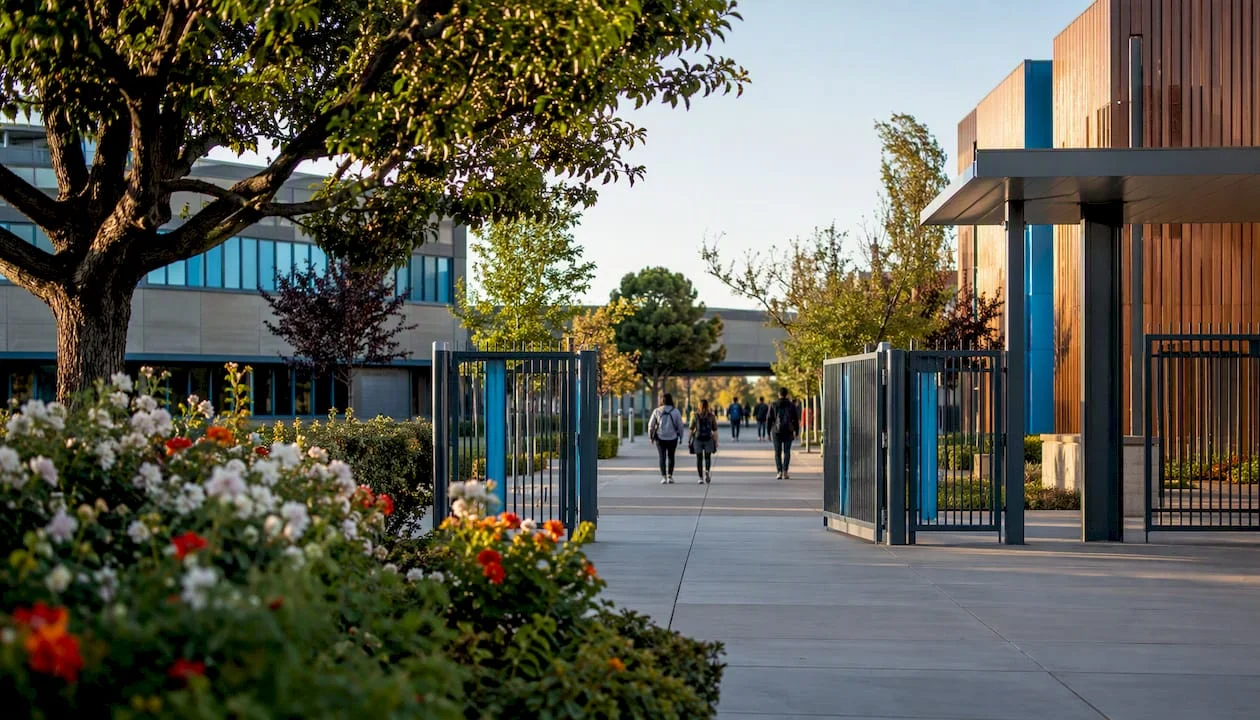
Other nearby schools in the district include Irvington High School and American High School, both of which outperform state averages. Elementary and middle school information also varies by zone, so a street-level boundary check matters as much as the district-level rating.
Practical steps before you sign a lease or make an offer:
- Verify the exact attendance zone at the Fremont Unified School District website using the property address.
- Contact the school’s PTA directly — they will tell you more about classroom resources and community involvement than any ranking site will.
- Time your rental or purchase search to align with open enrollment deadlines if you have flexibility.
Pro Tip: Buyers who lock in a home within the Mission San Jose attendance zone before the school year starts often find that the premium they paid holds or appreciates faster than the broader Fremont market — school-zone demand is structurally durable.
School-zone callout: Attendance boundaries can shift. Always confirm the current zone with the district directly, not from a listing description or a third-party map.
Is Fremont safe?
Practical precautions for new residents:
- Never leave valuables visible in a parked car.
- Use a package locker or request signature delivery for high-value shipments.
- Join a local Nextdoor neighborhood group to stay current on block-level activity.
| Area | Relative safety profile |
|---|---|
| Mission San Jose | |
| Irvington | |
| Warm Springs | Low to moderate; newer development |
| Centerville | |
| Niles |
Getting around Fremont: BART, highways, and realistic commute times
Fremont’s transit infrastructure is one of its strongest selling points as a Bay Area suburb. Three BART stations — Fremont, Warm Springs/South Fremont, and Union City (just outside city limits) — connect residents to San Francisco in roughly 50–60 minutes and to downtown Oakland in 35–40 minutes. The ACE (Altamont Corridor Express) rail line offers a direct commute option toward the Central Valley and Stockton for reverse commuters.

By car, I-880 runs north-south through the city and connects to San Jose in 20–35 minutes under normal conditions. I-680 provides access to the Tri-Valley and Pleasanton corridor. Both routes are subject to significant congestion during peak hours.
Transit-first neighborhoods: Warm Springs, Centerville (near Fremont BART station).
Car-dependent neighborhoods: Niles, Mission San Jose (limited bus frequency; most residents drive).
Pro Tip: If your employer is in South San Jose or the Milpitas tech corridor, Fremont often shortens your total commute compared with living in San Francisco or the Peninsula — and at a lower housing cost than Cupertino or Sunnyvale.
Lifestyle and daily life: parks, dining, and community in Fremont
Fremont’s outdoor amenities are genuinely exceptional for a city its size. Mission Peak Regional Preserve draws hikers year-round with its 2,517-foot summit and panoramic Bay views. Lake Elizabeth in Central Park offers a residential setting for picnics, paddle boating, and weekend events. Quarry Lakes Regional Recreation Area adds swimming and fishing to the mix.
The city’s cultural variety shapes its dining and community life in ways that distinguish it from most Bay Area suburbs. Fremont has one of the largest Afghan American communities in the United States, concentrated largely around the Centerville district, with Afghan restaurants, bakeries, and cultural organizations that give the area a distinct character. A large and well-established South Asian community, particularly Indian American residents, has built a dense network of temples, cultural centers, grocery stores, and restaurants throughout the city — most visibly along Mowry Avenue and in the Mission San Jose area.
Fremont’s ethnic and cultural variety is not incidental — it is structural. The city’s Afghan and Indian American communities have built institutions, businesses, and civic organizations that make Fremont feel less like a generic suburb and more like a city with genuine cultural depth.
For households, the Fremont Main Library, youth sports leagues, and community centers operated through the city’s Parks and Recreation department provide strong programming. Carlton Senior Living Fremont and the Art of Living Fremont center reflect the breadth of community services available across age groups.
On the trade-off side: Fremont is not a nightlife destination. Residents who want live music venues, late-night dining, or a dense urban social scene typically drive to Oakland or San Francisco.
How much income do you need to live in Fremont?
The honest answer depends on whether you are renting or buying, and whether you have children.
A single professional earning $120,000–$140,000 can rent comfortably in Centerville or Warm Springs. A dual-income tech household earning $250,000–$350,000 combined can buy in Irvington or Warm Springs with disciplined budgeting. Buying in Mission San Jose comfortably typically requires $350,000 or more in combined household income.
Pro Tip: For dual-income households, the two-income buying power guide walks through how to structure your combined finances for a Fremont purchase — including how to handle one income going on leave during the transaction.
Local market snapshot from a Bay Area agent
Fremont rewards buyers who do their homework before they make an offer. The difference between a good outcome and an expensive mistake usually comes down to three things: knowing the school zone, having financing locked before you tour, and understanding which neighborhoods are actually priced fairly versus which ones are carrying a premium that the market may not sustain.
Her Fremont real estate listings and market data are updated regularly.
Six immediate actions for Fremont buyers and renters:
- Get mortgage pre-approval in writing before your first property tour.
- Map your target school attendance zone to a specific set of streets, not just a neighborhood name.
- Schedule a home inspection even if the market pressure is high — skip it only with full awareness of the risk.
- Drive your commute route at rush hour before signing anything.
- Identify a licensed general contractor for post-close repairs before you need one urgently.
- Set a realistic timeline: competitive Fremont submarkets often require 3–6 months from search to close.
Pro Tip: In Fremont’s Mission San Jose submarket, the strongest offers combine pre-approval, a short inspection period, and a clean escalation clause. Sellers in that zone receive multiple offers routinely — your financing strength is your most persuasive negotiating tool.
Pros and cons: a quick checklist for your decision
Pros:
- Nearby schools, particularly Mission San Jose High School
- Three BART stations plus ACE rail for transit-dependent commuters
- Rich cultural variety with established Afghan and Indian American communities
- Strong outdoor recreation (Mission Peak, Lake Elizabeth, Quarry Lakes)
Cons:
- Median home prices around $1.35M make ownership inaccessible for most single-income households
- Limited walkability outside Centerville; most errands require a car
- Peak-hour congestion on I-880 and I-680 can extend commutes significantly
- Nightlife and urban entertainment options are limited compared with Oakland or San Francisco
- School-zone premiums mean the most popular addresses carry a structural price floor
Fremont is the right move for dual-income households and tech professionals who prioritize schools, safety, and transit access over urban density. If you are a single earner, a renter testing the Bay Area for the first time, or someone who values walkable nightlife, other cities in the region may serve you better.
What a local agent sees that the data doesn’t show
The numbers tell most of the story, but not all of it. What they miss is the texture of how Fremont’s neighborhoods actually function day to day. Mission San Jose is not just expensive — it is a community where school involvement, neighborhood watch participation, and local civic engagement are genuinely high. That social infrastructure is part of what you are paying for, and it is not visible in any price-per-square-foot figure.
The single action worth taking before anything else: tour Mission San Jose on a weekday morning, then drive through Centerville on a Saturday afternoon. The contrast tells you more about fit than any article can.
Fremont relocation support from a top-ranked local agent
REALTORS® by RealTrends Verified. She knows which streets sit inside the Mission San Jose attendance zone, which listings are priced to move, and where the negotiation leverage actually lives in this market.

Three ways Laxmitoprealtor reduces your relocation risk:
- School-zone search: Every buyer search is filtered by verified attendance boundaries, not neighborhood names.
- Negotiation strategy: With 570+ closed transactions in Silicon Valley, Laxmi knows how to structure offers that win without overpaying.
- Concierge move checklist: From pre-approval to utility setup, clients receive a step-by-step relocation plan tailored to Fremont.
Ready to start your search? Visit the Fremont buyer FAQ page for answers to the most common questions, or browse current Fremont listings to see what is available in your target neighborhood and price range.
Sources
- Living in Fremont: A Guide to Suburban Comfort
- Moving to Fremont 2026: Cost of Living & Housing Guide
- Living in Fremont, CA – U.S. News Real Estate
Recommended
- Moving to Fremont CA: Complete Relocation Guide – Laxmi Penupothula
- Living in Fremont vs Milpitas for Tech Workers: Full Comparison – Laxmi Penupothula
- Where to Buy a Home in Fremont for Households: Neighborhood Guide – Laxmi Penupothula
- Fremont Real Estate Guide: Neighborhoods, Schools, Commute & Home Prices – Laxmi Penupothula

Laxmi Penupothula
Top 1% Realtor SCCAOR, RealTrends Verified (2021–2025) • CA DRE #02047105
SCCAOR Top 1% Santa Clara County • Intero Chairman Circle 2023–2025 • \$650M+ Closed • 570+ Transactions
Silicon Valley & Bay Area Specialist — Cupertino, San Jose, Fremont, Milpitas, Sunnyvale & surrounding cities.
Get a Free Home Valuation →